Expert insights from Angus Walker, Global Head of Trading, IC
What if a trader could turn observations from hundreds of charts into a technical indicator without writing a single line of code?
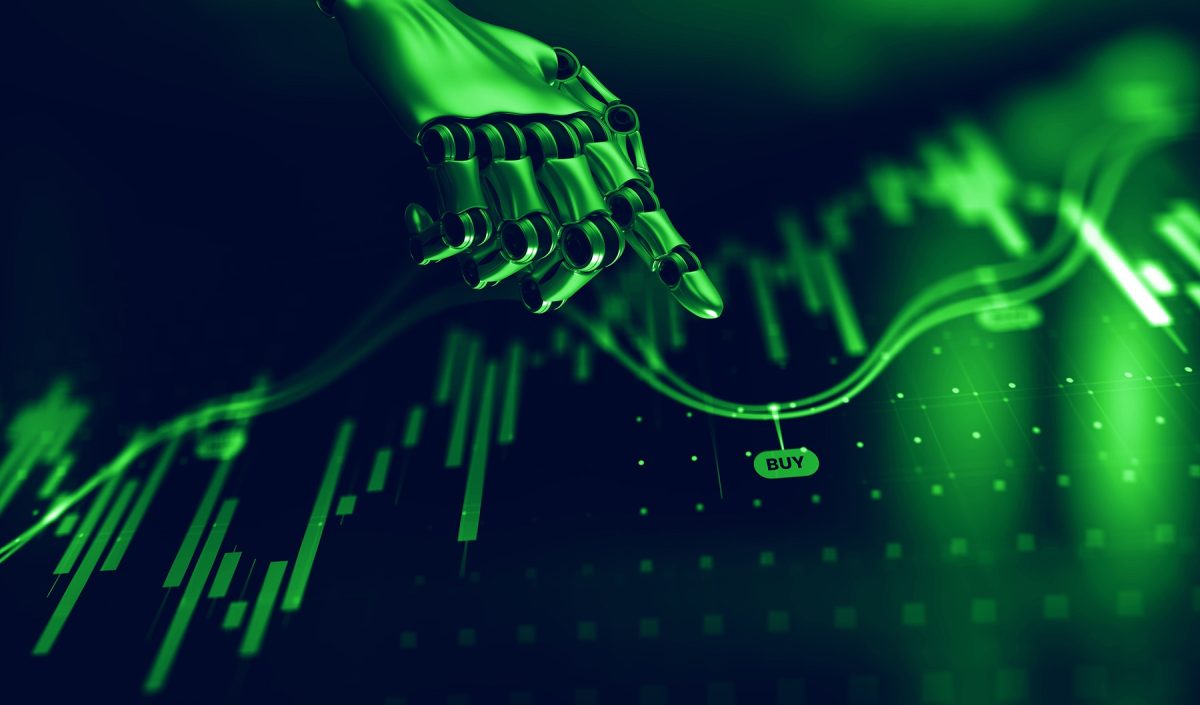
That’s exactly what Angus Walker, Global Head of Trading at IC, has been experimenting with. Using AI to interpret market observations and develop technical indicators, he has seen firsthand how rapidly the technology is transforming trading research.
“The difference between what you could do now and a year and a half ago has changed dramatically,” says Walker.
AI is making capabilities once reserved for programmers and quantitative researchers increasingly accessible to individual traders. But as the barriers to developing automated strategies fall, a bigger question emerges: if everyone has access to sophisticated trading tools, where does the real edge come from?
From trading ideas to working algorithms
One of the biggest developments is the ability to connect AI tools directly with trading platforms and external data sources.
Through technologies such as Model Context Protocol (MCP), tools including Claude Code can interact with platforms such as MetaTrader 5, retrieve market data, develop Python scripts, backtest strategies and translate them into MQL5.
Processes that previously required extensive coding and debugging can now be explored within a single research session.
“You can take an idea from hypothesis to research building in the same session,” Walker explains.
This gives individual traders access to capabilities resembling an on-demand engineering and quantitative research team. They can explore trading ideas, analyse larger datasets and research strategies across different markets without necessarily having advanced programming skills.
Building a strategy is only the beginning
But creating an automated strategy is not the same as developing one that works.
The real value of systematic trading lies in its research process: turning observations into hypotheses, testing them against historical data and validating how they behave under different market conditions.
“You have to research it. You have to build it, test it,” Walker emphasises.
Backtesting, out-of-sample validation and understanding why a strategy might succeed or fail remain essential.
AI can accelerate this work, but it cannot replace critical thinking or guarantee better trading results.
Technology cannot eliminate market risk
Even sophisticated automated strategies remain exposed to unexpected market movements, changing volatility and economic events.
Strategies such as Martingale or grid-based systems illustrate why risk controls matter. Without appropriate restrictions around volatility, news events and market conditions, these approaches can accumulate significant exposure and become vulnerable to sudden market movements.
Walker advocates an approach based on “trading as though the worst is going to happen”.
AI can help traders develop increasingly complex systems, but understanding exposure, setting appropriate limits and managing risk remain fundamental.
A new generation of retail traders?
AI is beginning to challenge the traditional idea of what makes a successful trader.
As programming, quantitative research and market analysis become more accessible, individual traders can explore approaches that previously required specialist knowledge and resources.
For the trading industry, this raises broader questions about how platforms, data access and infrastructure will evolve to support increasingly sophisticated retail traders.
The opportunity is significant, but better technology does not automatically create a competitive advantage.
AI is changing what individual traders can build. The real edge may increasingly come from knowing what to research, how to test it and when to manage the risk.
About IC
IC is one of the world’s largest online trading providers, offering access to a wide range of trading instruments across Forex, indices, commodities, stocks, bonds, and cryptocurrencies. Founded in 2007 in Australia, IC is known for its deep liquidity, ultra-low spreads, and advanced trading technology, serving a diverse and extensive international community of traders across global markets. Ranked No. 1 globally for retail FX/other volumes (Finance Magnates Q4 Report), IC continues to invest in innovation, infrastructure, and strategic partnerships while strengthening its international presence.
Risk Disclaimer
The information contained in this article is provided for general informational purposes only. While IC Markets Global takes reasonable steps to ensure the accuracy and completeness of the information presented, it makes no representation or warranty, express or implied, regarding its accuracy, completeness or continued relevance. The information is subject to change without notice.
Nothing contained in this article constitutes, or should be construed as, investment advice, financial advice, a trading recommendation, or an offer or solicitation to buy or sell any financial instrument or engage in any investment activity. The information should not be relied upon as the basis for making any investment or trading decision.
Any information, data, rankings, views or opinions obtained from third-party sources and referred to in this article are provided for informational purposes only. Although such sources are considered reliable, IC Markets Global does not guarantee their accuracy or completeness. References to third-party sources do not constitute an endorsement of, or an assurance regarding, their content.
Links to external websites are provided for convenience and informational purposes only. Their inclusion does not imply approval or endorsement by IC Markets Global, which accepts no responsibility for the content, accuracy or availability of external websites, to the extent permitted by applicable law.
Media contact
IC Global Communications